
Fatigue & the Female Athlete: Part 1
The Rise of Women’s Sports
In recent years, women’s sports have experienced unprecedented growth, increasing in popularity, visibility and commercial impact. Yet, the majority of current research in sport and exercise disproportionately focuses on male athletes (Cowley et al., 2021; Paul et al., 2022). This imbalance is driven by several factors, including greater access to public and commercial datasets on male athletes, financial and marketing priorities that emphasize men’s sport, the predominance of male clinicians and researchers in sports medicine, and embedded sex bias within the field (Costello et al., 2014; Paul et al., 2022). This gap underscores the need for more investigations that explore the specific physiological and biomechanical demands of female athletes to advance injury prevention, performance optimisation, and overall health in the female athlete (Emmonds et al., 2019; Landry et al., 2007; Smith et al., 2007).
Globally, women’s soccer has experienced substantial growth, marked by increased viewership, sponsorship, and media visibility. Over 1.7 million supporters attended the FIFA Women’s World Cup 2023 in person, with more than 2 billion viewers worldwide (FIFA, 2024). FIFA identifies women’s football as its greatest growth opportunity (FIFA, 2024). Major international tournaments are breaking audience records, and domestic competitions, including the NWSL, are expanding rapidly. This surge reflects increasing appreciation for the skill, athleticism, and competitive intensity displayed by female athletes.
The WNBA, amongst other new and existing leagues, is displaying a similar growth trajectory. The WNBA achieved record-setting attendance during the 2024 season, drawing over 54 million unique viewers, hit its highest total attendance in 22 years and averaged nearly 9,800 fans per game. Merchandise sales spiked 601% and streaming subscriptions jumped 366% (WNBA, 2024).
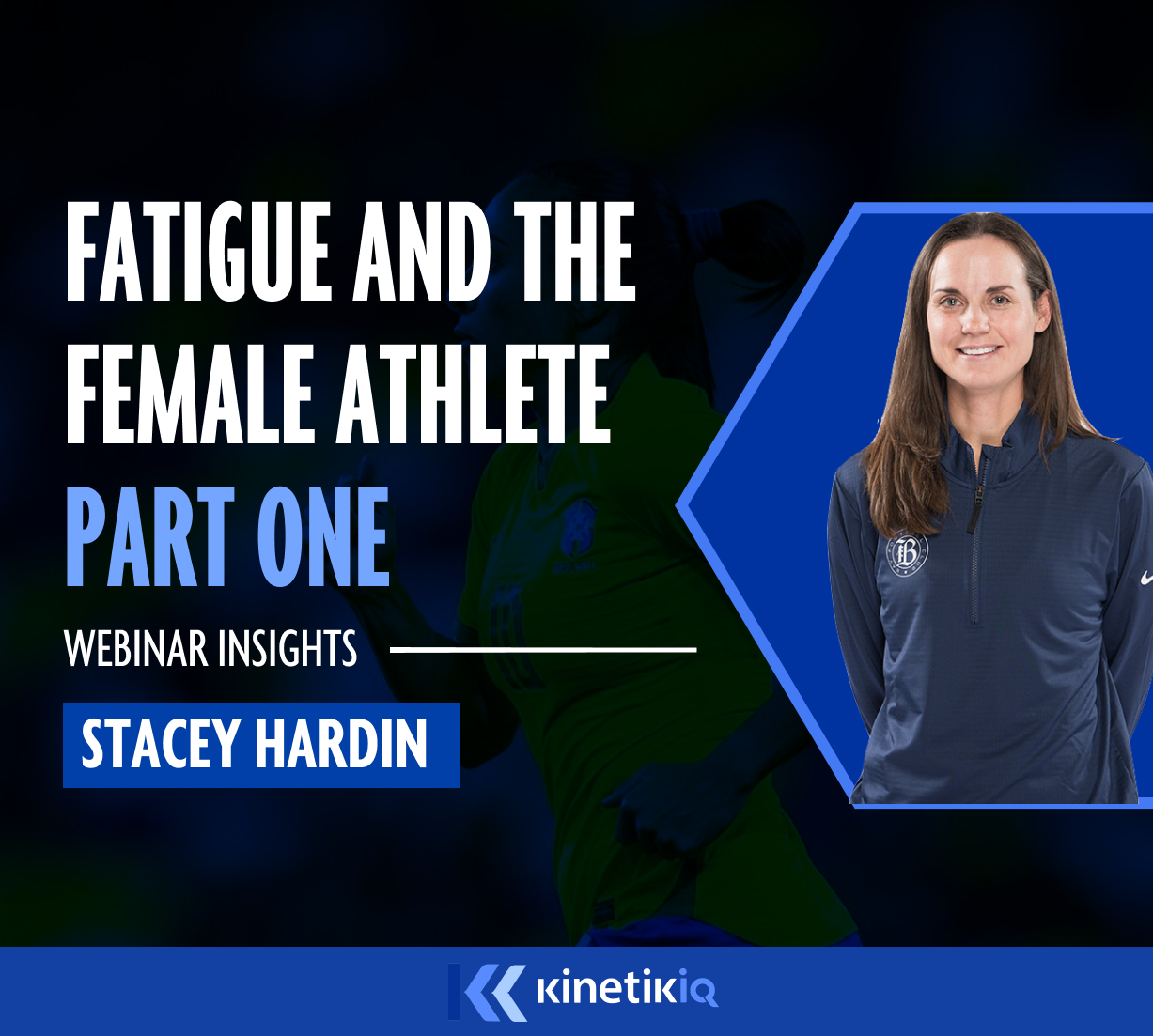
Want access to the webinar for full details on the rise of women’s sports, male & female physiological differences, and more? Click here to access Stacey Hardin’s full webinar.
How are Females and Males Different Physiologically?
Physiologically, males typically possess greater skeletal muscle mass and longer limb lengths, resulting in approximately 40% higher peak power output and 30% greater mean power during sprint efforts compared with females (Billaut & Bishop, 2009). In contrast, female athletes generally demonstrate a higher proportion of type I fibres, lower glycolytic capacity, and greater fat oxidation, conferring superior muscle oxidative capacity and reduced reliance on glycolytic pathways following intense efforts (Ansdell et al., 2020; Datson et al., 2021). Understanding these characteristics helps practitioners tailor training, strength and conditioning, and recovery strategies to better support female athletes.
This is increasingly relevant as female athletes often compete every 3-4 days. Evidence indicates that players may not be fully recovered 72 hours post-match, making targeted recovery interventions essential for optimal readiness. Research also suggests that women exhibit greater fatigue resistance and enhanced metabolic recovery during repeated maximal or high-intensity bouts than men (Laurent et al., 2010; Hottenrott et al., 2021), potentially linked to fibre-type distribution, metabolic profile, and reduced glycogen utilisation (Ansdell et al., 2020; Datson et al., 2022; Krustrup et al., 2022). Reproductive hormones such as estrogen may further support recovery via anti-inflammatory effects, whereas premenstrual hormone withdrawal may impair recovery due to heightened inflammation and symptom burden. However, these responses are highly individual, reinforcing the need for continued research in this area.
In this three part blog series, we’ll explore what exactly is fatigue in the female athlete? How is it measured using subjective and objective tools? How can the information we learn drive the best decision making to support the health and performance of female athletes? Stay tuned as we dive in and explore this.
About the author
Stacey Hardin has over a decade of experience in elite sports as a leader in athlete health and performance. She was Major League Soccer’s first female Senior Director of Player Health and Performance, serving with Minnesota United FC in various roles, including head athletic trainer and performance consultant. She is currently working on her phD with a focus on quantification of and factors affecting fatigue in elite female soccer players through a real-world perspective.
Reach out if you’d like to connect on this topic, have any questions, or would want to connect with a member of our team.